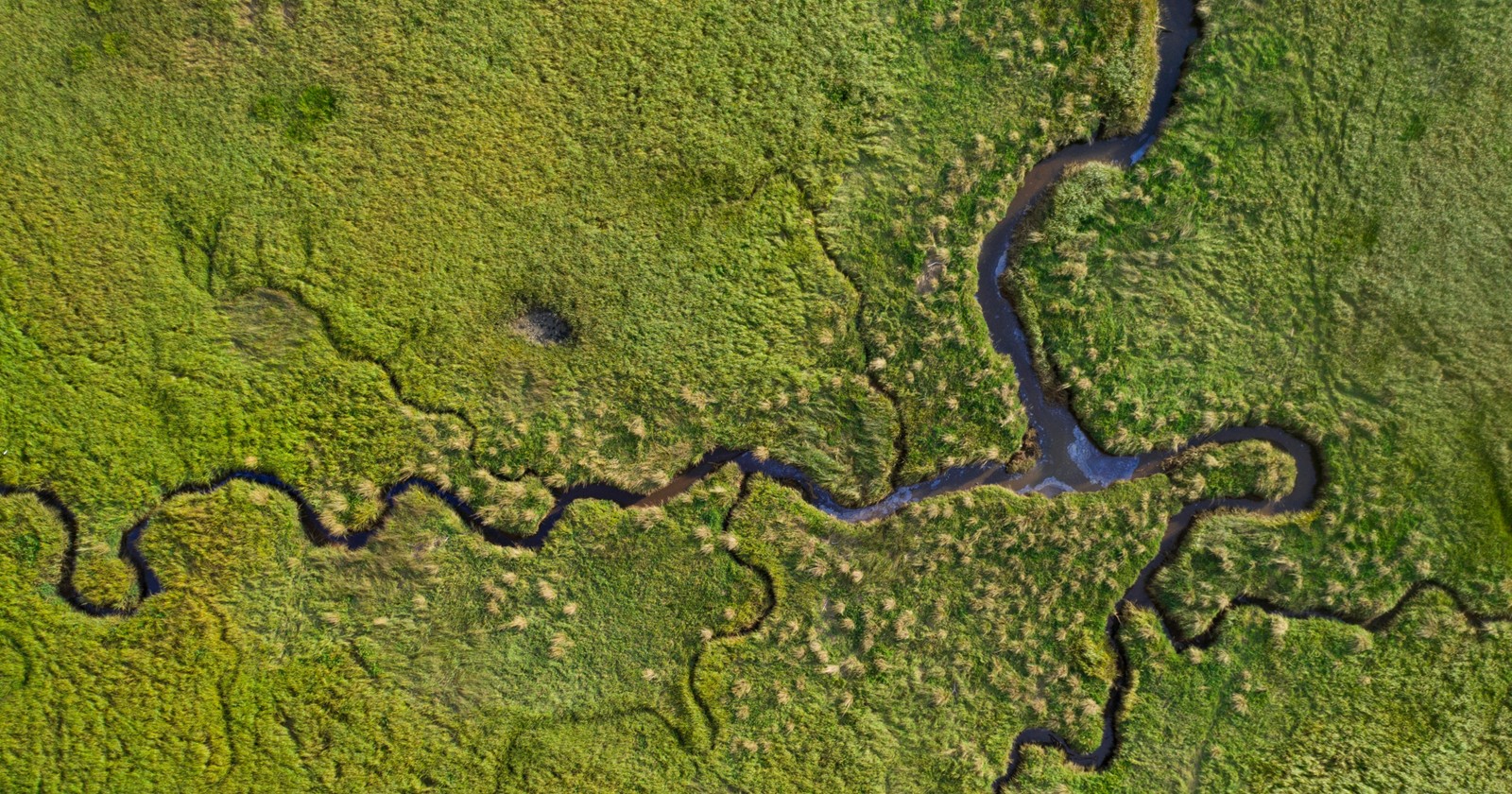
In October 2025, Spark and other organizations convened leading scientists from universities, federal agencies, and research institutions around the world to chart a plan for tackling a critical blind spot: tracking methane emissions from remote natural sources like tropical wetlands and permafrost.
One year later, momentum for addressing this blind spot has grown significantly. Scientists have progressed from:
This means that we are closer to near-real-time monitoring of natural emissions than we were a year ago. Still, more can and must be done to turn this foundation into action for tracking and reducing greenhouse gas emissions.
The challenge: Natural sources appear to be emitting more methane, and we don’t have sufficient monitoring in place to measure them
Methane is a potent greenhouse gas which accounts for around 30% of today’s warming. As temperatures rise, natural systems are expected to begin emitting even more methane (as well as other gases like carbon dioxide)—for example, warmer wetlands and lakes speed up microbial activity that release methane as a byproduct. Indeed, there is evidence this is already beginning to happen. Further, a recent study from Spark and partners found that under a moderate emissions scenario, warming-induced emissions from permafrost, wildfires, wetlands, and freshwaters systems could emit around 150Mt of methane per year by 2100—6 times the total amount of methane currently emitted by the entire U.S. economy. Earlier this year, more than 250 leading scientists called for strengthening methane monitoring as a key part of methane mitigation under the Angera Declaration for Methane Action, a joint statement on key priorities for accelerating methane action.
The important efforts already in place to reduce and track methane emissions—the Global Methane Pledge, the UN’s International Methane Emissions Observatory, NOAA’s Global Monitoring Lab and the Integrated Carbon Observation System, to name a few—are critical and should continue to be strengthened. But most current efforts are built to track methane from human activity, not from natural sources. Without this key piece of the puzzle, emissions reduction strategies are built on an incomplete picture.
Mapping a global ecosystem methane observation system
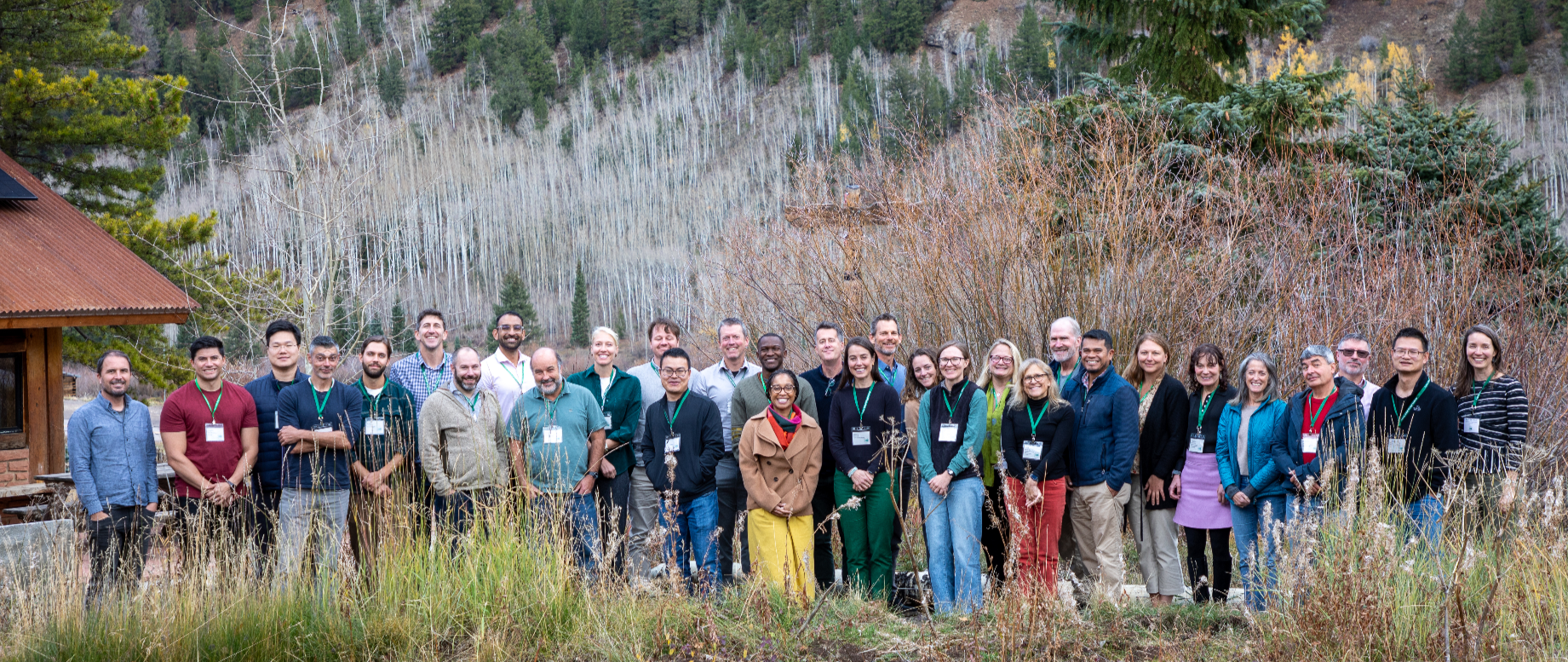
At last year’s workshop—convened by Aspen Global Change Institute and co-chaired by representatives from Spark, Arizona State University, Stanford University, and Woodwell Climate Research Center—more than 30 scientists from around the world jointly identified key ways to improve monitoring of natural emissions. Those included:
In March 2026, the first peer-reviewed output from the workshop led by Jenny Watts of Woodwell Climate Research Center was published in Science, outlining the need for more cohesive monitoring of warming-induced emissions. In July, Philippe Ciais and workshop participants subsequently published a detailed vision for how a Global Ecosystem Methane Observing System would reduce uncertainties, and in August, Hui Liu published the strategic design for what this would look like. This series of papers included priority geographies, expected costs, and potential benefits—finding, for example, that adding 20 methane monitors in strategic locations across Africa could reduce uncertainty in African methane emissions by 85%. Being able to distinguish natural emissions from human direct emissions (e.g., from livestock or oil and gas production) means we can better verify whether efforts to cut human methane emissions are working, and what more needs to be done to meet climate goals.
Collaborative research efforts like these make it easier to target the highest impact next steps. Now, with a solid vision in hand, Spark and partners are turning to action.
Making this system a reality: deploying GHG monitors in Africa
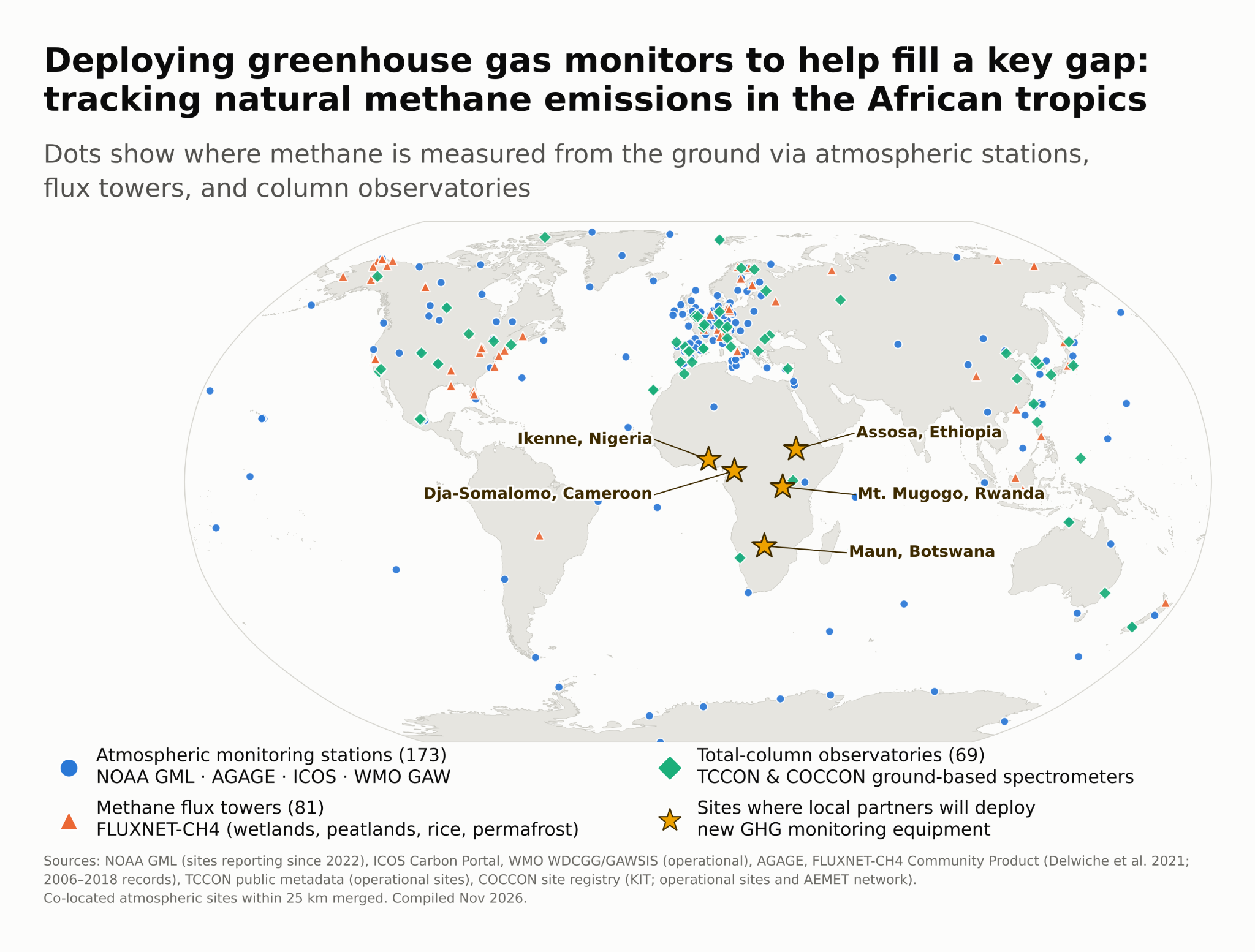
These research papers repeatedly showed that one of the quickest ways to improve our understanding of warming-induced emissions was to deploy greenhouse gas monitoring instruments to priority blind spots in the tropics. So, with support from the Heising-Simons Foundation, Spark and the Congo Basin Institute are working with university and local African partners to deploy greenhouse gas monitors to key sites in Botswana, Cameroon, Nigeria, Ethiopia, and Rwanda as part of the new Methane Alert initiative.
Following instrument calibration and coordination activities, the instruments are on track to begin shipping by the end of 2026 to these five countries, with observations starting in early 2027. This will produce a step change in greenhouse gas monitoring capacity in the tropics and especially continental Africa. These GHG monitoring instruments will immediately fill a gap in observation capacity, allowing the world to better understand natural sources of emissions and implement plans to reduce methane and other greenhouse gas emissions. It can also be a model for further expanding monitoring capacity in other hotspots around the world.
Looking forward
Tackling big challenges, like building a global greenhouse gas monitoring system for natural emissions, becomes far more achievable when experts from different disciplines and geographies come together. This was one of the core goals of the 2025 Methane Alert convening, and has been essential to the momentum and progress since.
Looking forward, it is essential to turn this momentum into additional action. The current El Niño will immediately test our global monitoring system through extreme conditions that affect emissions from wetlands or fires. This will give us additional insight into how the current network of greenhouse gas monitors can track natural emissions, and how we can fill any gaps that emerge.
No one organization can solve this challenge. Methane Alert partners are coordinating measurements with the World Meteorological Organization and its Global Greenhouse Gas Watch (G3W) program, as well as developing training programs to expand the reach of the work to benefit local communities. In the coming months, Spark and our partners will continue working to close critical blind spots in our ability to monitor methane and other greenhouse gas emissions, and identify how the subsequent data can help us target efforts to reduce emissions and warming.
In October 2025, Spark and other organizations convened leading scientists from universities, federal agencies, and research institutions around the world to chart a plan for tackling a critical blind spot: tracking methane emissions from remote natural sources like tropical wetlands and permafrost.
One year later, momentum for addressing this blind spot has grown significantly. Scientists have progressed from:
This means that we are closer to near-real-time monitoring of natural emissions than we were a year ago. Still, more can and must be done to turn this foundation into action for tracking and reducing greenhouse gas emissions.
The challenge: Natural sources appear to be emitting more methane, and we don’t have sufficient monitoring in place to measure them
Methane is a potent greenhouse gas which accounts for around 30% of today’s warming. As temperatures rise, natural systems are expected to begin emitting even more methane (as well as other gases like carbon dioxide)—for example, warmer wetlands and lakes speed up microbial activity that release methane as a byproduct. Indeed, there is evidence this is already beginning to happen. Further, a recent study from Spark and partners found that under a moderate emissions scenario, warming-induced emissions from permafrost, wildfires, wetlands, and freshwaters systems could emit around 150Mt of methane per year by 2100—6 times the total amount of methane currently emitted by the entire U.S. economy. Earlier this year, more than 250 leading scientists called for strengthening methane monitoring as a key part of methane mitigation under the Angera Declaration for Methane Action, a joint statement on key priorities for accelerating methane action.
The important efforts already in place to reduce and track methane emissions—the Global Methane Pledge, the UN’s International Methane Emissions Observatory, NOAA’s Global Monitoring Lab and the Integrated Carbon Observation System, to name a few—are critical and should continue to be strengthened. But most current efforts are built to track methane from human activity, not from natural sources. Without this key piece of the puzzle, emissions reduction strategies are built on an incomplete picture.
Mapping a global ecosystem methane observation system
At last year’s workshop—convened by Aspen Global Change Institute and co-chaired by representatives from Spark, Arizona State University, Stanford University, and Woodwell Climate Research Center—more than 30 scientists from around the world jointly identified key ways to improve monitoring of natural emissions. Those included:
In March 2026, the first peer-reviewed output from the workshop led by Jenny Watts of Woodwell Climate Research Center was published in Science, outlining the need for more cohesive monitoring of warming-induced emissions. In July, Philippe Ciais and workshop participants subsequently published a detailed vision for how a Global Ecosystem Methane Observing System would reduce uncertainties, and in August, Hui Liu published the strategic design for what this would look like. This series of papers included priority geographies, expected costs, and potential benefits—finding, for example, that adding 20 methane monitors in strategic locations across Africa could reduce uncertainty in African methane emissions by 85%. Being able to distinguish natural emissions from human direct emissions (e.g., from livestock or oil and gas production) means we can better verify whether efforts to cut human methane emissions are working, and what more needs to be done to meet climate goals.
Collaborative research efforts like these make it easier to target the highest impact next steps. Now, with a solid vision in hand, Spark and partners are turning to action.
Making this system a reality: deploying GHG monitors in Africa
These research papers repeatedly showed that one of the quickest ways to improve our understanding of warming-induced emissions was to deploy greenhouse gas monitoring instruments to priority blind spots in the tropics. So, with support from the Heising-Simons Foundation, Spark and the Congo Basin Institute are working with university and local African partners to deploy greenhouse gas monitors to key sites in Botswana, Cameroon, Nigeria, Ethiopia, and Rwanda as part of the new Methane Alert initiative.
Following instrument calibration and coordination activities, the instruments are on track to begin shipping by the end of 2026 to these five countries, with observations starting in early 2027. This will produce a step change in greenhouse gas monitoring capacity in the tropics and especially continental Africa. These GHG monitoring instruments will immediately fill a gap in observation capacity, allowing the world to better understand natural sources of emissions and implement plans to reduce methane and other greenhouse gas emissions. It can also be a model for further expanding monitoring capacity in other hotspots around the world.
Looking forward
Tackling big challenges, like building a global greenhouse gas monitoring system for natural emissions, becomes far more achievable when experts from different disciplines and geographies come together. This was one of the core goals of the 2025 Methane Alert convening, and has been essential to the momentum and progress since.
Looking forward, it is essential to turn this momentum into additional action. The current El Niño will immediately test our global monitoring system through extreme conditions that affect emissions from wetlands or fires. This will give us additional insight into how the current network of greenhouse gas monitors can track natural emissions, and how we can fill any gaps that emerge.
No one organization can solve this challenge. Methane Alert partners are coordinating measurements with the World Meteorological Organization and its Global Greenhouse Gas Watch (G3W) program, as well as developing training programs to expand the reach of the work to benefit local communities. In the coming months, Spark and our partners will continue working to close critical blind spots in our ability to monitor methane and other greenhouse gas emissions, and identify how the subsequent data can help us target efforts to reduce emissions and warming.
Stay in touch
Sign up to our Spark newsletter and stay updated!
Menu
Stay in touch
Sign up to our Spark newsletter and stay updated!