
Eren Bilir
October 2026
-
January 2028
CARDAMOM-JPL is a Bayesian model-data fusion framework developed to support NASA Earth science via multi-sensor integration within a mechanistic and physics-based land model framework. Though CARDAMOM-JPL has demonstrated applications in quantifying warming-induced emissions and feedbacks in the contemporary era-- including wetland CO2/CH4 feedbacks, fire and biomass forecasts, and evaluation of global drivers of land-sink variability-- its approach to estimating initial conditions from contemporary observations has placed it in different research space than bottom-up TBMs, which typically leverage a spin-up protocol. As a result, CARDAMOM-JPL and bottom-up TBMs both explore sensitivities of complex environmental process routines, but embark on fundamentally different modeling experiments to do so (different timescales, initial condition assumptions, baseline conditions, etc), obscuring clear interpretation of how the observational record embedded in CARDAMOM impacts estimation of future trajectories. Funded participation in WIE-MIP enables the development of novel spin up protocols and other compatibility adaptations to partially bridge the gap and support closer comparisons between data-aware frameworks like CARDAMOM and traditional bottom-up land surface models. We emphasize that CARDAMOM remains a complementary approach to bottom-up modeling due to its sparse mechanistic structure and coarse time step—both required due to the high computational cost of parameter inversion-- and cannot capture all relevant feedbacks. Nevertheless, we anticipate unprecedented insights on how remote-sensing-based parameter calibration, anchored to contemporary land surface dynamics, influences inferences of ecosystem sensitivity and centennial-scale evolution across represented routines.
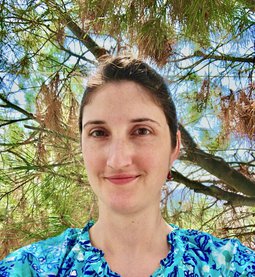
Eren Bilir came to JPL as a postdoctoral researcher in August 2022. Eren studies interactions between the land surface and the atmosphere through the carbon and water cycles, with a particular interest in vegetation processes. She earned her PhD at UC Berkeley studying climatic controls on tree water dynamics, both in the field at the Eel River Critical Zone Observatory and in a terrestrial ecosystem model. Prior to that, Eren contributed to the development of the IPCC’s Fifth Assessment Report as a member of the Working Group 2 Technical Support Unit’s science team.

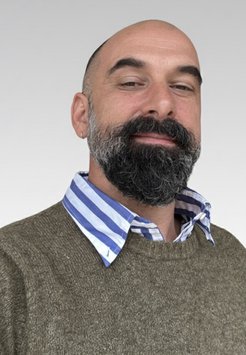
Terrestrial ecosystems are a fascinating yet poorly resolved component of the Earth’s water and carbon cycles. My primary interests are to investigate global-scale terrestrial carbon-water cycle processes and their influence on carbon exchanges between the atmosphere and the terrestrial biosphere. My interests include resolving biosphere-atmosphere carbon exchanges by synthesizing satellite-based measurements of land-surface states and fluxes and atmospheric CO2 and CH4 concentrations in an effort to advance understanding of terrestrial ecosystems. To this end, I use Bayesian paradigms to couple biogeochemical models with satellite datasets to resolve the integrated process controls and climate sensitivity terrestrial biosphere, and to ultimately advance knowledge on the role of terrestrial ecosystems in the broader Earth System.
Menu
Stay in touch
Sign up to our Spark newsletter and stay updated!

